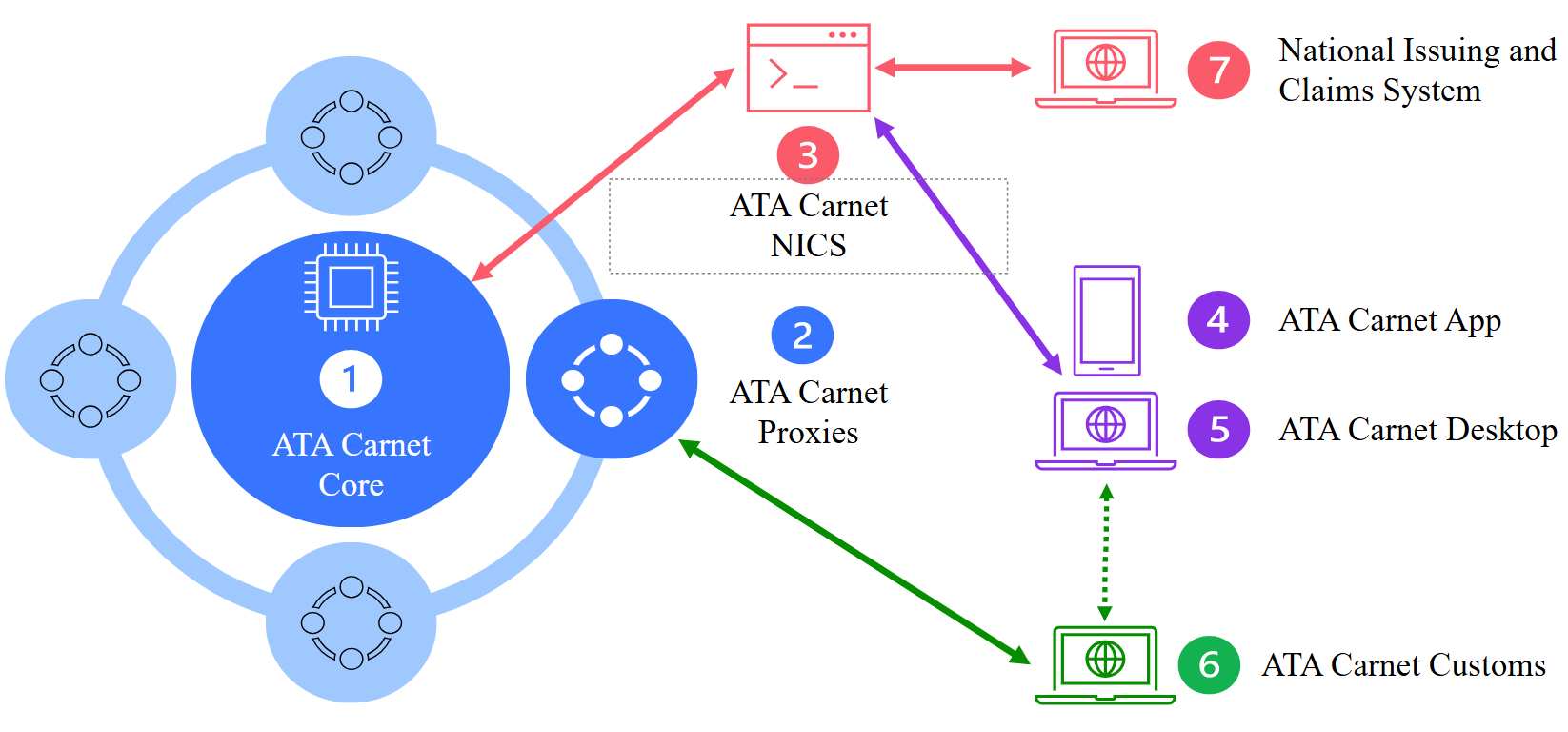
The ATA Carnet System architecture consists of 6 components provided and managed by ICC:
- The ATA Carnet Core is the central IT system that links the other parts together and ensures that the exchange mechanism is secure and robust. This component includes various monitoring, reporting, alerting and analytics tools developed to enable ICC to manage the eATA digital environment.
- ATA Carnet Proxies strengthen the connection speed and enable each user to connect easily to the Core. ICC plans to deploy six proxies around the world. Each proxy will record a copy of all the eATA Carnets issued and can back up the other proxies in case of a technical failure.
- The ATA Carnet NICS provides an application programming interface (API) to enable each country to integrate its own national issuing and claims system (Exhibit 6) with the ATA Carnet Core. Six API bases have been built to cover the entire world. NGAs/IAs can integrate their systems via one of the six API bases.
- The ATA Carnet App is the mobile application provided to Carnet users (holders/representatives). It is a secure wallet where users can store the eATA Carnets purchased from an IA/NGA and prepare border crossing declarations via the app. Each user has a profile and can therefore access the system via any connected devices. When an eATA Carnet is issued, users receive instructions on how to download it in the mobile application, and a QR code is created for each declaration. When crossing borders, users simply need to show Customs the QR code.
- For those who prefer working on a computer, the ATA Carnet Desktop web application offers the same core features as the ATA Carnet mobile app. ATA Carnet Desktop is especially useful for company managers who need to manage multiple carnets for their business, or for freight forwarders who frequently handle carnets on behalf of various holders. This design makes it easier to manage and share carnets with all relevant participants.
- The ATA Carnet Customs portal is the component dedicated to Customs authorities. It provides a standard user interface to create and manage accounts for Customs offices and officers, manage border crossing operations and follow the lifecycle of eATA Carnets. Customs authorities can use ICC’s standard user interface directly. Later in the project timeline, it is foreseen that Customs authorities will also have the option to process eATA Carnets using their own digital systems. To do so, they will need to integrate their IT system with the ICC system, as IAs/NGAs do.
- Last but not least, the National Issuing and Claims System represents the digital tool(s) developed by NGAs/IAs and to be integrated with the ICC system. This component is not standardized, as each country has its own specific and unique way of managing issuance and claims. As a result of integration, data or information received from or sent to ICC’s ATA Carnet system is standardized.
The following is a schematic representation of the different components of the ATA Carnet system and how they interact with each other.
Was this article helpful?
That’s Great!
Thank you for your feedback
Sorry! We couldn't be helpful
Thank you for your feedback
Feedback sent
We appreciate your effort and will try to fix the article